Why OilScout AI
Where OilScout fits in the exploration decision stack
OilScout AI operates at the pre-discovery decision layer, using outcome-trained satellite intelligence to statistically screen acreage before seismic, geological modeling, or analogue analysis begins. We reduce exploration noise so higher-cost tools can be deployed where they matter most.
Pre-Discovery Screening
Screens acreage before seismic or geological modeling to prioritize where capital should or should-not be deployed.
Capital Efficiency
Eliminates weaker prospects earlier, reducing unnecessary seismic, consulting, and evaluation spend.
Relative Likelihood Distribution Used for Parcel Prioritization
Real-world validation test — Model predictions on West Texas arid basin (500 screened parcels)
Note: "Likelihood" indicates the relative probability of oil potential for each parcel, not the model's prediction accuracy.
How OilScout Works
OilScout is a standardized, region-specific geospatial screening system that evaluates land parcels through automated analysis and historical comparison.
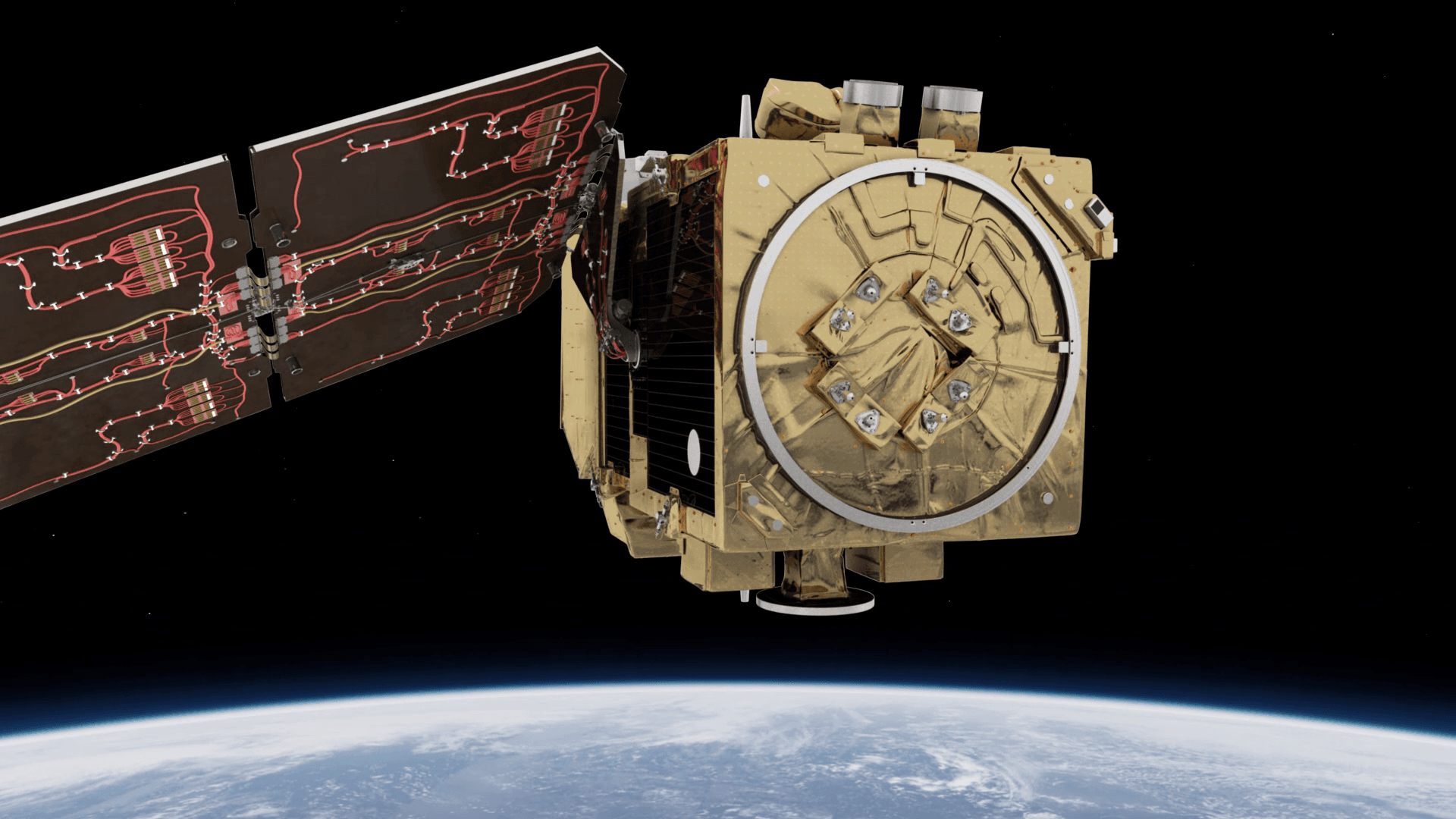
Earth observation imagery from the Sentinel-2 satellite constellation used as input for surface-level screening analysis.
Data Processing
Historical well outcomes and multi-spectral satellite imagery are aggregated across multiple dates and processed through standardized, region-aligned pipelines to establish a consistent analytical baseline.
Signal Extraction
Spectral indices, texture measures, and contextual contrasts are computed to characterize surface-level patterns and anomalies relative to surrounding areas.
Model Evaluation
Trained models assess each location by comparing its surface characteristics to outcome-labeled wells within the same region and peer group.
Decision-Support Output
Results are delivered as relative likelihood rankings, confidence bands, visual summaries, and interpretive context to support early-stage decision-making.
Model Validation & Data Foundation
35,000+ Outcome-Labeled Wells
Models are trained and validated using tens of thousands of historical wells spanning multiple Texas basins and production outcomes.
Multi-Date Satellite Sampling
Satellite features are derived from multiple observations across seasons and conditions to improve robustness, reduce environmental noise, and mitigate temporal bias.
Region-Aware Model Validation
Model performance is evaluated independently within each Texas region to ensure that higher-priority locations consistently rank above lower-priority locations under region-specific surface and environmental conditions.
Ranking-Oriented Evaluation
Model performance is validated based on the relative ranking of producing versus non-producing tiles, not single-point predictions.
Tile-Based Ranking Validation
Historically producing locations consistently rank higher than non-producing locations within the same region when evaluated across large sets of historical tiles.
Percentile Stratification
Historically producing sites are disproportionately represented in higher percentile bands, indicating clear separation between higher and lower priority parcels.
Cross-Region Consistency
Ranking behavior is assessed across multiple Texas regions to verify that model outputs remain stable and comparable between regions, avoiding systematic bias toward any single geographic area.
Internal model development uses standard classification metrics for optimization. External results are presented exclusively as relative rankings to support screening and prioritization workflows. Please contact for additional information.
Meet the Creators
Co-inventor and owner of the intellectual property underlying OilScout AI. Contributed to the original invention by defining the core problem statement, analytical approach, and conceptual framework for using satellite-derived surface indicators and probabilistic modeling to assess oil potential prior to drilling.
Co-founder and technical lead behind OilScout AI, with a background in robotics, embedded systems, and applied machine learning. Experience includes building AI systems that integrate computer vision, geospatial data, and automated decision pipelines. Holds NVIDIA certifications in AI and computer vision, with hands-on work in satellite imagery analysis, feature engineering, and model validation.
Product Scope & License Definition
Region
Texas (current release)
License Type
Non-exclusive annual software license
Usage
Internal evaluation and screening only
Deployment
Self-hosted backend with desktop frontend UI